
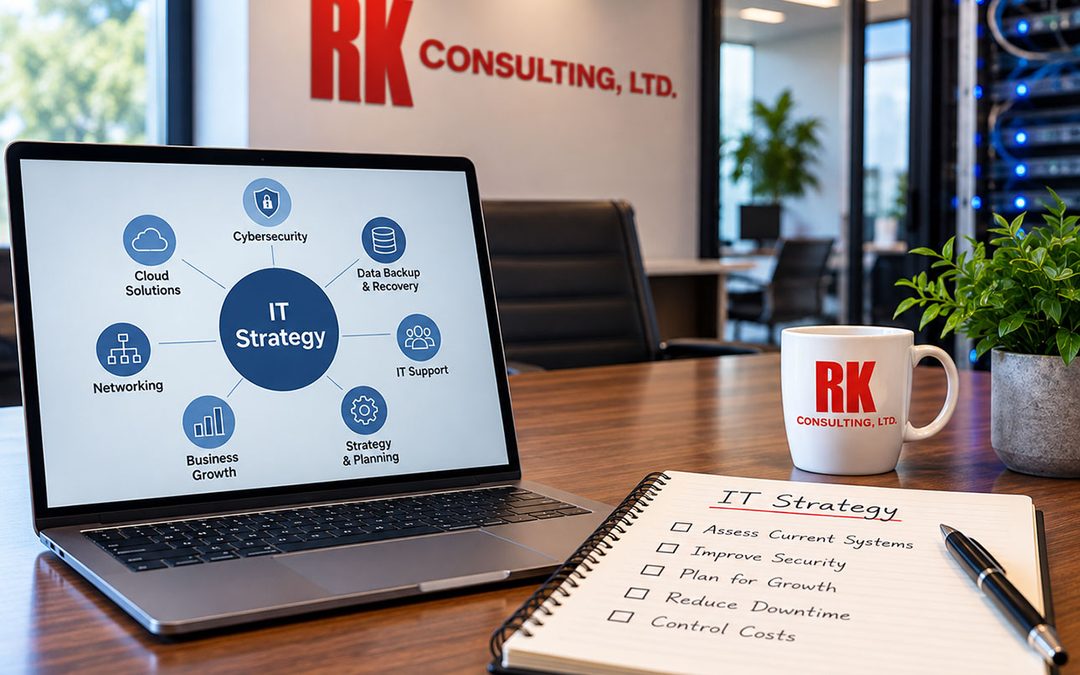
Technology has become essential to almost every part of running a business. Email, accounting systems, customer information, cloud applications, cybersecurity, networks, backups, remote access, and everyday communication all depend on technology working properly. Yet many small and medium-sized businesses still approach IT reactively. A computer stops working, the internet goes down, the network stops working, employees cannot access software applications. Those problems need solving, but fixing individual issues isn't the same as having an IT strategy.
IT Support Fixes Problems. IT Strategy Helps Prevent Them
Traditional IT support often follows a simple model: something breaks, and someone fixes it. That approach may work when technology plays a relatively small role in the business. Today, downtime, lost data, cybersecurity incidents, outdated equipment, or poorly planned systems can affect an entire organization. A good IT strategy looks beyond today's problem. It considers how computers, networks, cloud services, security, backups, software, and other systems work together—and whether that technology supports company operations. The objective is to better manage technology already in place.
Start With the Existing IT Environment
Before making major technology decisions, it helps to understand what is already there. An IT assessment can examine the current network, computers, servers, cloud services, software, security practices, backups, and other critical systems. The assessment can also identify aging equipment, security vulnerabilities, unnecessary expenses, performance issues, and systems that no longer meet the organization's needs. From there, priorities are set. Some problems may need immediate attention, while others can become part of a longer-term technology plan and budget.
Cybersecurity Needs to Be Part of the Plan
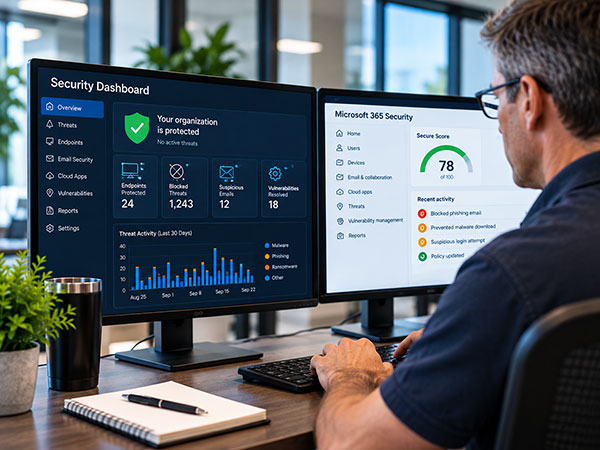
Cybersecurity is no longer an issue only for large corporations. Small and medium-sized businesses store valuable information, process financial transactions, use email extensively, and often rely on cloud applications to run daily operations. Security should therefore be considered throughout the IT environment rather than treated as a separate product. That can include protecting computers and networks, securing Microsoft 365 accounts, controlling access to business information, maintaining software updates, protecting against phishing, and ensuring employees understand common security risks. RK Consulting believes appropriate layers of protection should match both the business needs and risks.
What Happens When Technology Goes Down?
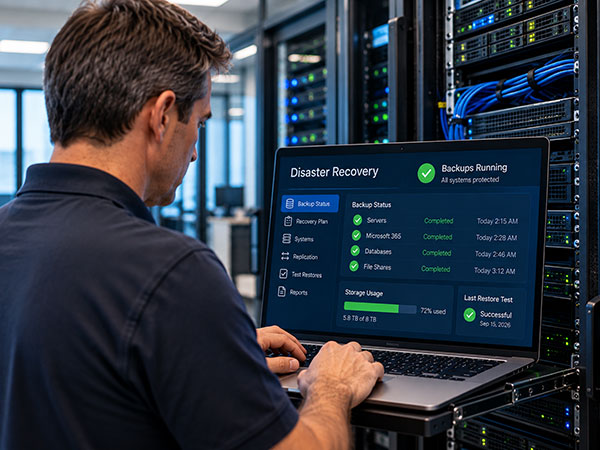
Every business should also consider what happens when an important system becomes unavailable. A hardware failure, cyberattack, internet outage, accidental deletion, or other unexpected event can interrupt operations with little warning. Having a backup is important, but a backup alone is not a disaster recovery plan. A business should know which systems and information are most critical, how those systems are protected, and how to restore operations if something goes wrong. Effective disaster recovery planning helps reduce downtime and provides a clearer path back to normal operations.
Plan Technology Investments Before Making Them
Technology purchasing decisions are easy to make individually. A new server is needed. A cloud application looks useful. A cybersecurity vendor recommends another product. Computers are getting old. The problem is that individual purchases can gradually create a patchwork IT environment that is difficult to manage. An IT strategy provides a framework for evaluating IT decisions. Does the proposed technology solve a real business problem, work with existing systems, improve productivity, reliability, or security, and make financial sense? Answering those questions before investing can prevent expensive mistakes.
Ready to Take a Closer Look at the IT Environment?
RK Consulting has more than 25 years of experience helping small and medium-sized businesses manage computers, networks, infrastructure, security, and technology planning. Our approach is straightforward: understand the business, assess the technology, identify the priorities, and develop a practical plan. RK Consulting helps small and medium-sized businesses identify technology problems, reduce risk, and develop practical IT solutions based on business needs and priorities.
Start with a free on-site IT evaluation. RK Consulting will review the current environment, discuss concerns and opportunities, and recommend practical next steps.
Call 303-321-0925 or email sales@rkconsult.com to schedule a free IT evaluation.
Frequently Asked Questions
1. What is an IT strategy for a small or medium-sized business?
An IT strategy is a practical plan for how technology will support business operations and future needs. It considers computers, networks, cloud services, cybersecurity, backups, software, infrastructure, and technology investments as parts of one overall environment.
2. How often should a business review its IT environment?
A business should review its IT environment periodically because regular assessments can identify potential problems before they become costly disruptions.
3. Is having data backups the same as having a disaster recovery plan?
No. Backups protect copies of important information, while disaster recovery addresses how you will restore critical systems and data after a hardware failure, cyberattack, outage, or other disruption. A recovery plan sets priorities and procedures for restoring essential operations.
4. Why should cybersecurity be part of an overall IT strategy?
Cybersecurity affects nearly every part of a modern IT environment, including computers, networks, email, Microsoft 365, cloud applications, and business data. Incorporating security into overall technology planning helps identify vulnerabilities, reduce risk, and build appropriate layers of protection throughout the organization.
Hi, this is a comment.
To get started with moderating, editing, and deleting comments, please visit the Comments screen in the dashboard.
Commenter avatars come from Gravatar.